Skip to content
macOS 14+ · Apple silicon & Intel

FindDiskKiller

See what keeps using your disk.

FindDiskKiller brings app disk I/O, AI Agent storage, file activity, and drive-health evidence into one native macOS workspace — then helps you review old Codex and Claude conversations safely.

App Activity: CPU, disk read/write, network download/upload — per process, sortable columns, adjustable widths. Four dimensions at once.

100%

Local Processing

0

Data Uploaded

macOS 14+

Supported

10

Languages

Everything in one workspace

See app activity, AI Agent storage, files, devices, and health — together.

AI Agent Storage

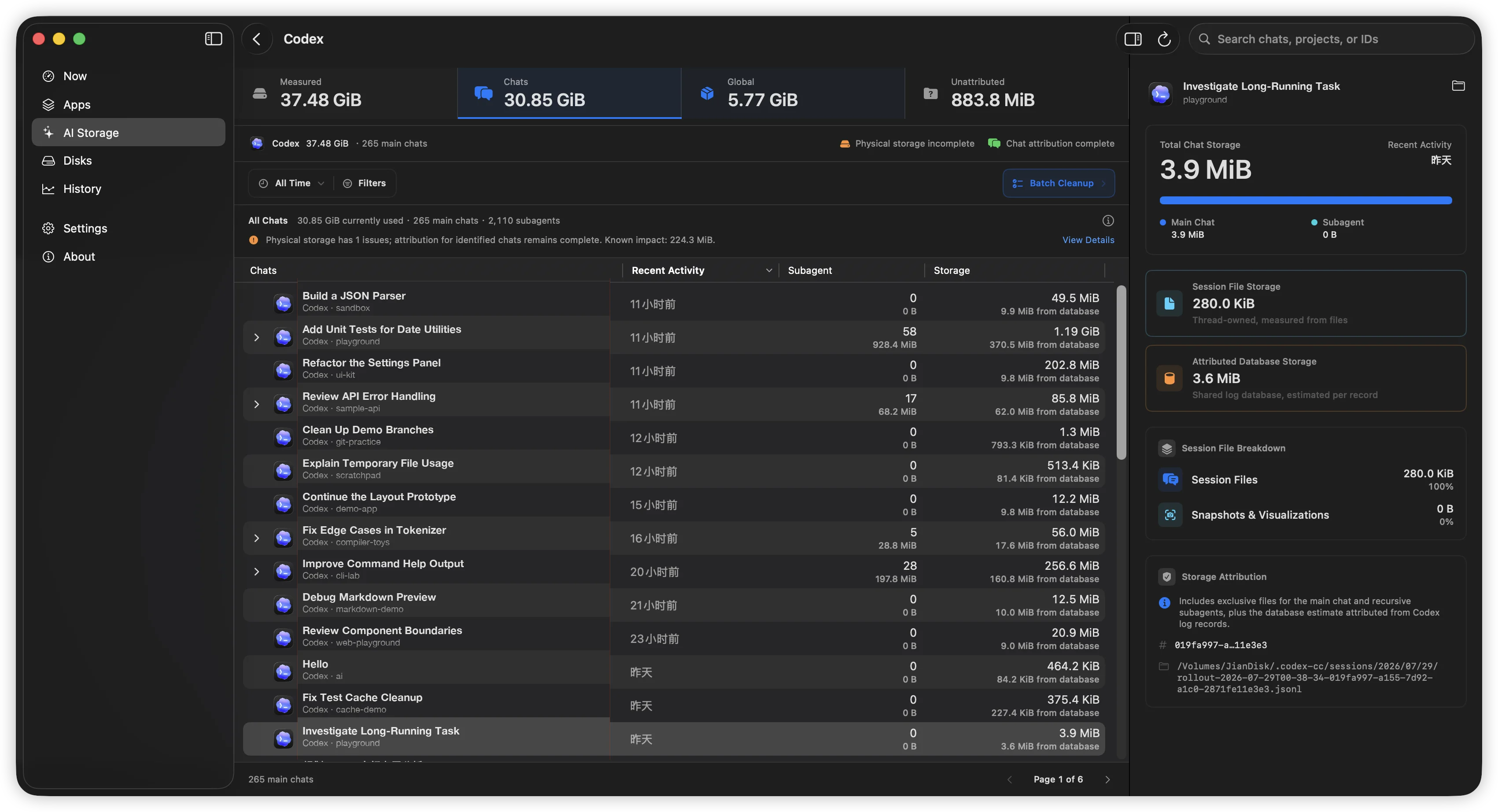
Start a local analysis of Codex and Claude storage, attribute usage to individual threads or sessions, and review older conversations before permanent deletion through supported official provider capabilities.
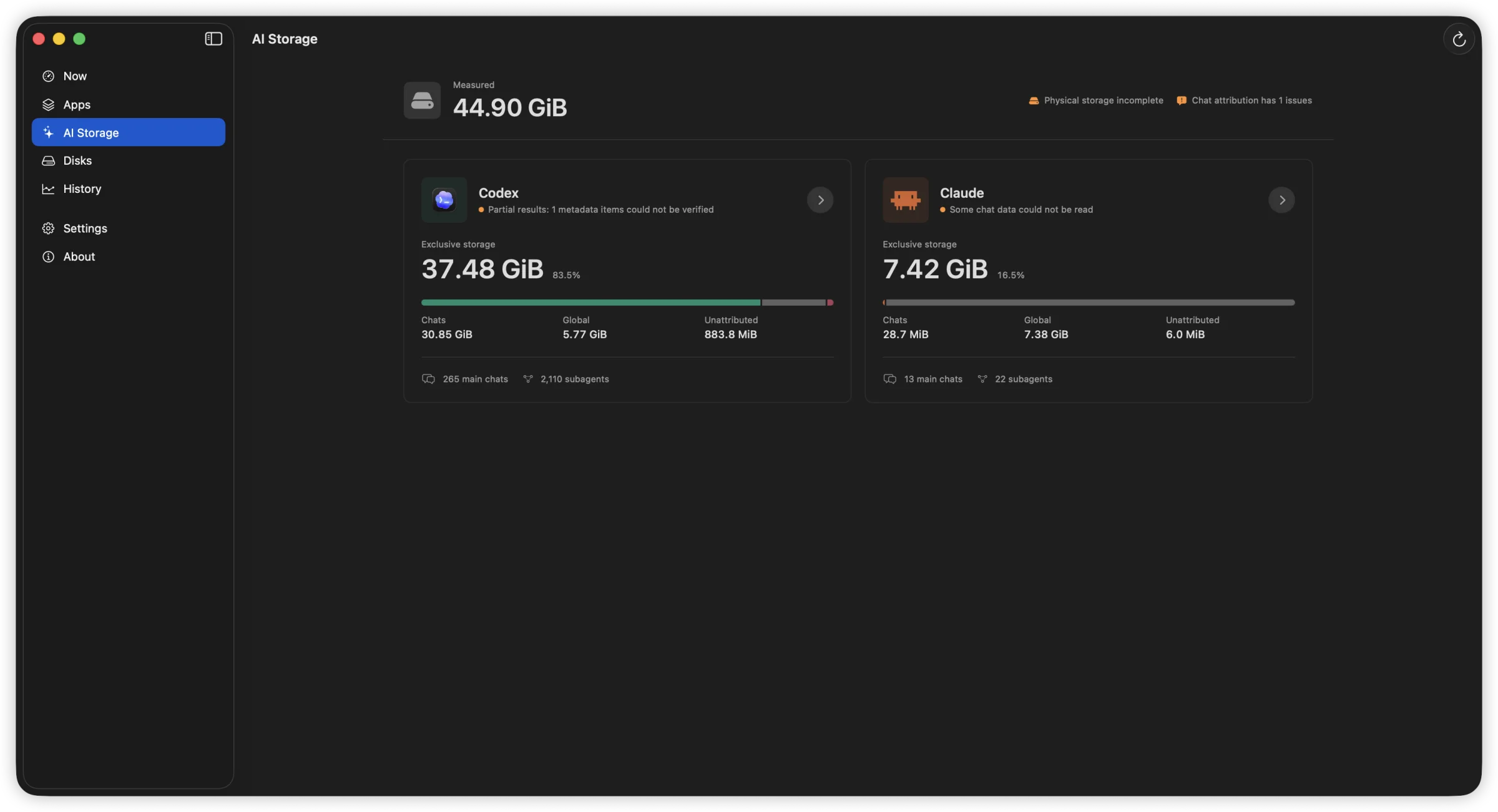
AI Storage overview separating chat, global, and unattributed storage for Codex and Claude.
Codex AI Storage listing activity and subagents per thread, with the selected thread's complete storage breakdown visible on the right.
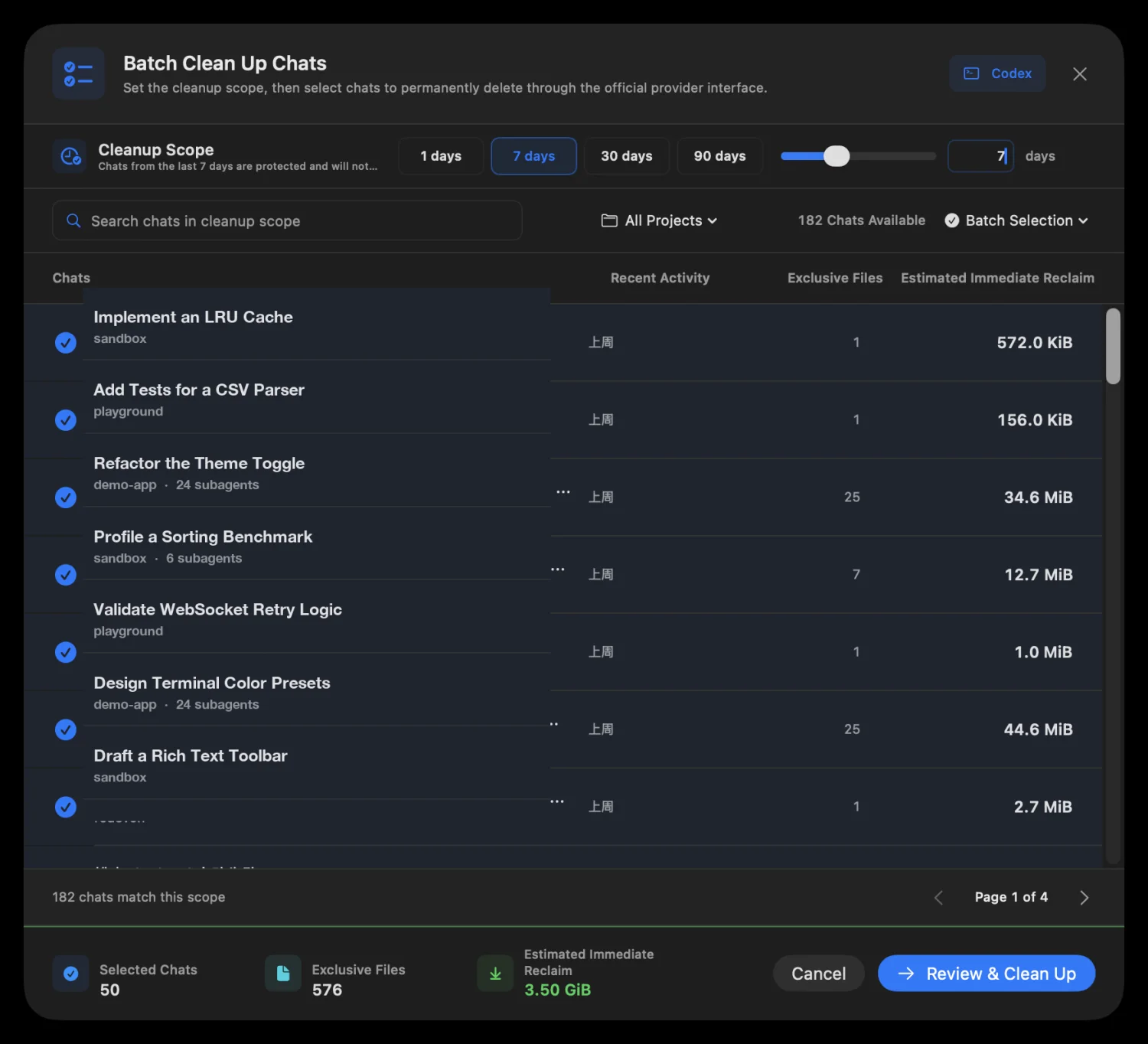
Batch cleanup review showing selected conversations and estimated immediate reclaim before permanent deletion.

Analysis never starts automatically. Active or changed sessions are skipped, and unsupported providers never fall back to database writes or manual transcript deletion. Claude Desktop and Cowork sessions are deleted in Claude Desktop.

App Activity

CPU, disk read/write, network download/upload — per process, sortable columns, adjustable widths. Four dimensions at once.

App Activity: 1-min, 15-min, and 1-hour line charts. Hover for exact values. Spot sustained patterns, not just momentary spikes.

File Activity

Open file locations, recently modified directories, and on-demand access tracing — start tracing any path to see who reads or writes it.

Open file locations, recently modified directories, and on-demand access tracing — start tracing any path to see who reads or writes it.
File Activity: Guided workflow into targeted per-file tracing

Disks & Volumes

Device throughput shown with familiar names — Macintosh HD, JianDisk — not cryptic identifiers. See which device is busy.

Temperature, lifetime reads/writes, wear level, spare capacity, power-on hours — only showing fields your hardware actually reports.

Device throughput shown with familiar names — Macintosh HD, JianDisk — not cryptic identifiers. See which device is busy.

Not another system monitor

FindDiskKiller is built for one focused job: follow sustained disk activity from a visible signal to the app, files, and device behind it.

Conventional resource viewsFindDiskKiller
Metrics split across separate viewsApp-centric workspace: disk, CPU, network, files together
Easy to see one-second spikes5-second rate, cumulative total, peak, and sustained patterns
Low-level device identifiersFamiliar volume names and storage relationships first
Missing values mistaken for zeroUnavailable, partial coverage, and reason explicitly shown
File events become a firehose of logsGuided workflow into targeted per-file tracing

Permissions & Privacy

Start monitoring immediately. Grant additional access only when you need it.

1

Open and use

Basic CPU, disk, network, volume, and process data are available without admin privileges.

2

Approve when needed

File and directory access tracking installs a background component only when you choose to begin tracing.

Monitoring and analysis happen on your Mac. No process names, file paths, disk serial numbers, or monitoring history are uploaded. No ads, telemetry, or third-party tracking SDKs.

Frequently Asked Questions

How is this different from Activity Monitor?

Activity Monitor shows per-process resource usage but does not combine disk I/O, file activity, and drive health evidence in one workspace. FindDiskKiller adds time-range charts, targeted file tracing, and SMART/NVMe health data — all without sending your data off-device.

Does it work on external drives?

Yes. Physical device throughput is shown for all mounted volumes. For SMART/NVMe health data, availability depends on your enclosure and connection type. Many USB enclosures do not pass through SMART attributes; the UI explicitly marks unavailable data.

What permissions does it need?

Basic monitoring works immediately without admin privileges. File access tracing prompts to install a background component on first use. Tracing protected locations may require Full Disk Access in System Settings. You control when tracing starts and stops.

Is my data uploaded anywhere?

No. All monitoring, analysis, and display happens on your Mac. No process names, file paths, disk serial numbers, or monitoring history are transmitted. The app contains no analytics, telemetry, or third-party tracking SDKs.

How do I completely remove it?

Quit the app, remove the background component in System Settings > General > Login Items & Extensions, then drag the app from Applications to Trash. No kernel extensions, launch daemons, or launch agents are installed. See the Uninstall page for step-by-step instructions.

Ready to find what's using your disk?

Download for macOS
Version 1.3.1713.4 MBmacOS 14.0+